Property owners searching for reliable pest control services Lubbock solutions require targeted perimeter defense designed for South Plains conditions. Arid winds, regional caliche soils, and nearby agricultural activity drive pests toward structural foundations year-round.

A professional pest control services company in Lubbock is an extermination and structural protection provider that inspects, identifies, and eradicates local insect and rodent populations across High Plains residential and commercial structures.
Every service reflects the same meticulous attention to detail, whether it's a single job or a larger pest control services project across Lubbock.
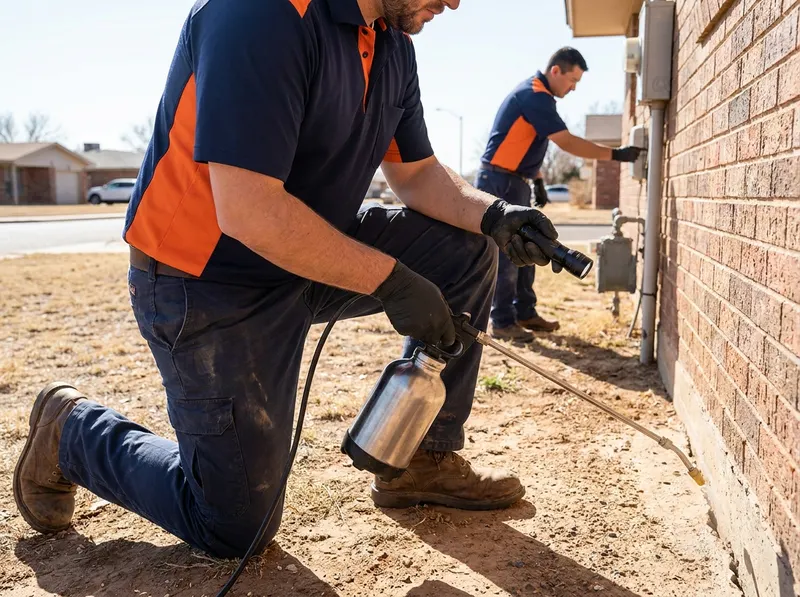
Turkestan cockroaches and American cockroaches thrive in Lubbock water meter boxes, sewer cleanouts, and exterior irrigation utility vaults, while German cockroaches colonize interior kitchen cabinetry, dishwasher voids, and warm sub-refrigerator motor housings. Cockroaches vector pathogenic bacteria including Salmonella and E. coli directly onto meal preparation areas and food storage surfaces. Eradication combines non-repellent structural liquid residuals, target-specific bait matrices containing hydramethylnon or indoxacarb, and juvenile hormone mimics that prevent nymphal instars from molting into breeding adults. Treatment includes comprehensive dusting of structural plumbing voids behind drywall and moisture-heavy utility chases, eliminating hidden nesting populations across interior and exterior harborages.
Get a quote →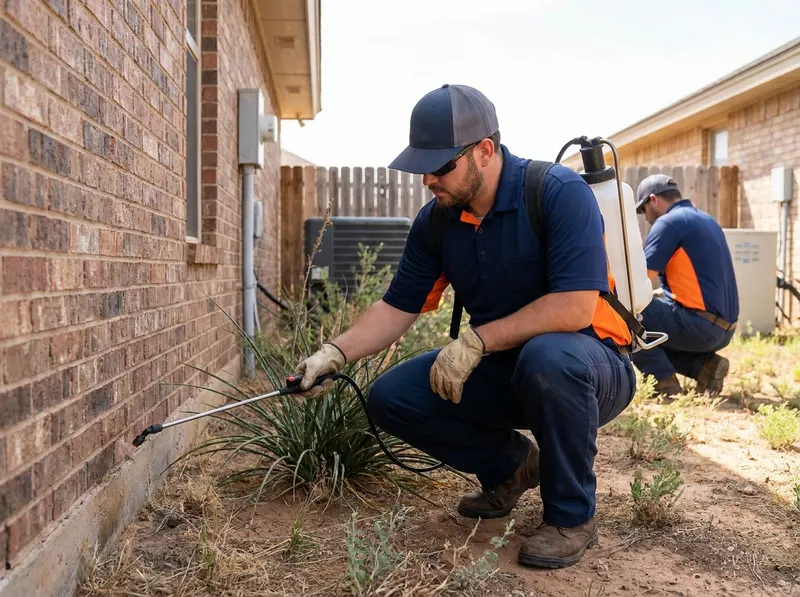
Striped bark scorpions, brown recluse spiders, and black widows exploit masonry weep holes, foundation expansion joints, stack stone facades, and crawl spaces throughout established South Plains neighborhoods. Scorpions seek cool harborages beneath decorative landscape rocks and crawl into interior baseboard channels during extreme summer heat waves, while web-building and hunting spiders construct egg sacs within unconditioned attic insulation. Treatments employ low-dust micro-encapsulated pyrethroids formulated to resist alkaline caliche degradation and solar UV breakdown. Technicians treat exterior bands spanning 3 feet up the foundation wall and 5 feet out across adjacent soil, paired with fine aerosol dusting within wall voids, drop ceilings, and subfloor vents to paralyze nocturnal arachnids on contact.
Get a quote →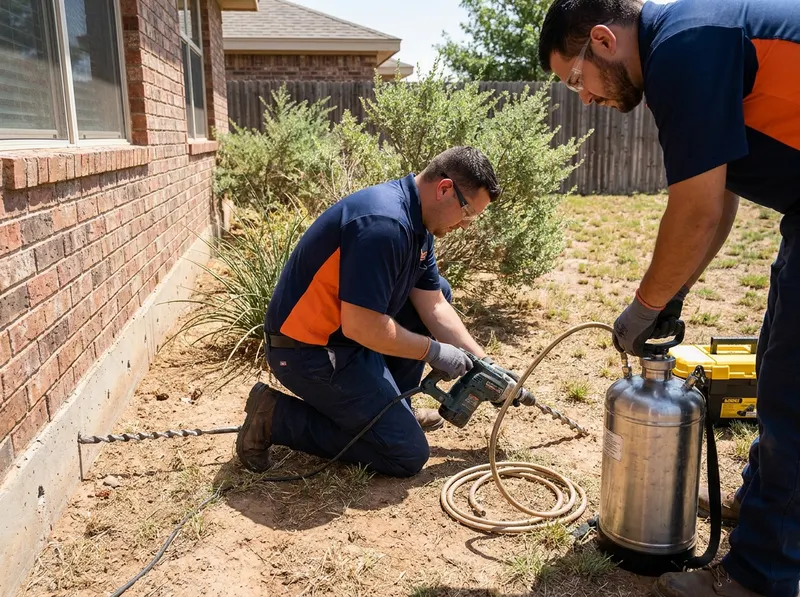
Eastern subterranean termites construct subterranean mud shelter tubes upward through hairline foundation cracks, cold joints, and plumbing penetrations to consume structural softwoods behind interior drywall. Termite colonies thrive in the subterranean moisture pockets beneath residential concrete slabs, causing thousands of dollars in hidden structural damage before interior evidence manifests. Remediation requires digging a 6-inch by 6-inch trench directly against exterior stem walls, followed by high-pressure termiticide injection using non-repellent active ingredients such as fipronil or imidacloprid. Technicians drill through attached garage slabs, brick porches, and concrete patios at 12-inch intervals to establish an unbroken subterranean chemical barrier, which foraging workers cross and transfer systematically through the entire central colony via social grooming and trophallaxis.
Get a quote →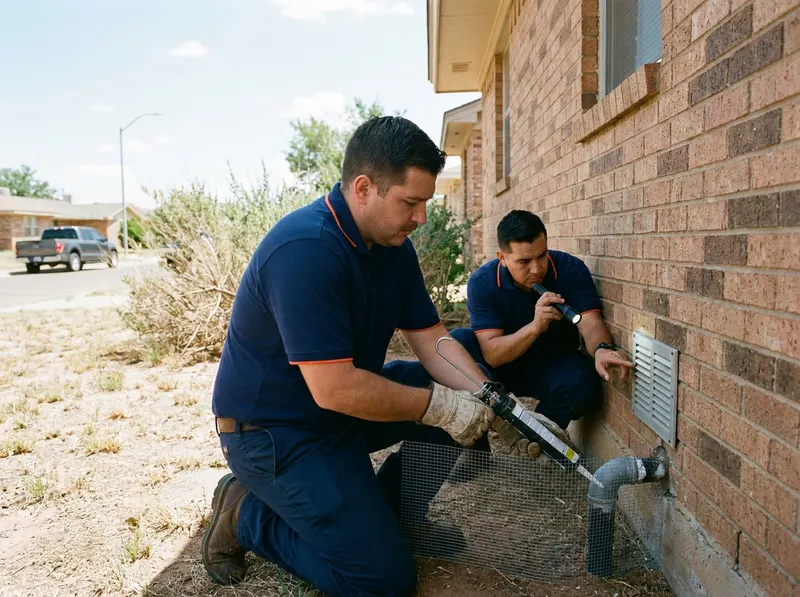
Norway rats, roof rats, and house mice migrate from dry pastureland, agricultural fields, and alleyway dumpsters directly toward domestic warmth during the autumn harvest season. Rodents gnaw exposed electrical wiring inside attic spaces, soil crawl space fiberglass insulation with urine, and spread parasites throughout living environments. Management couples exterior mechanical exclusion with multi-catch interior trapping protocols and tamper-resistant exterior rodent bait stations. Structural technicians seal pipe penetrations, roof returns, soffit junctions, and weep holes using rust-proof copper mesh, stainless hardware cloth, and specialized elastomeric polyurethane sealants that rodents cannot breach, restoring permanent physical perimeter defense without relying purely on persistent interior rodenticides.
Get a quote →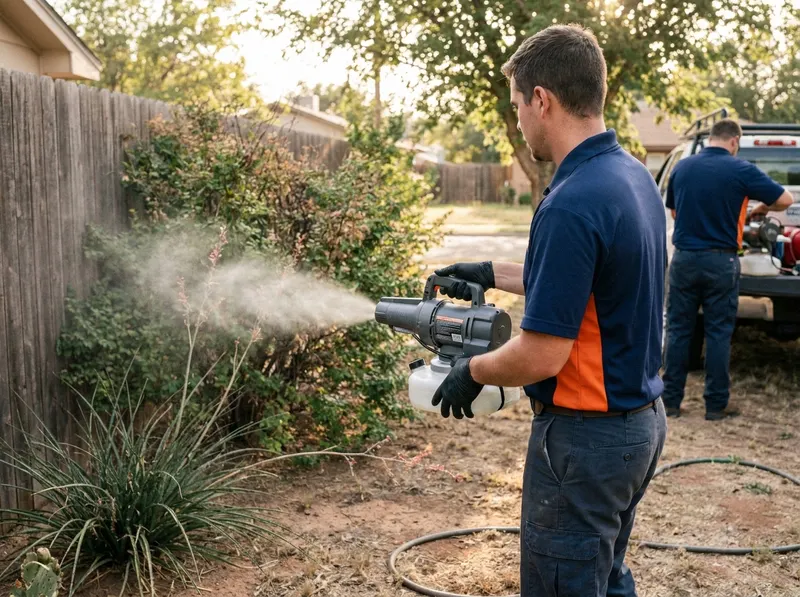
Mosquito species including Culex tarsalis and Aedes aegypti reproduce within stagnant irrigation pools, clogged gutters, livestock tanks, and residential runoff basins across the South Plains, presenting verified transmission vectors for West Nile virus. Treatments combine monthly ultra-low-volume automated misting along dense shrubbery, under-deck voids, and ornamental plantings with application of targeted biological larvicides containing Bacillus thuringiensis israelensis (BTI). Larvicide dunks eliminate mosquito wrigglers in standing water features, French drains, and uncirculated bird baths before they transition to flying adults. Exterior residual foliage sprays bond to leaf undersides, sustaining adult insect knockdown throughout the peak breeding season spanning May through September.
Get a quote →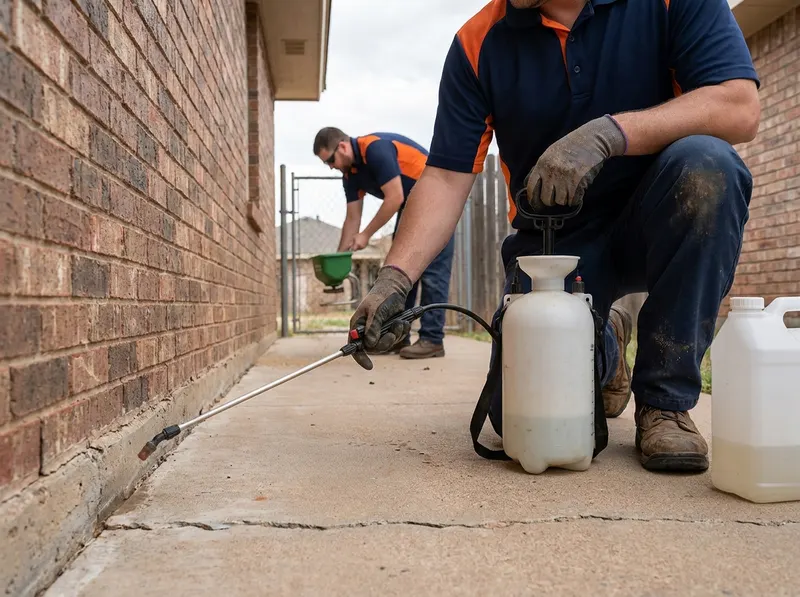
Pavement ants, rover ants, acrobat ants, and red imported fire ants establish extensive subterranean and cavity-based nesting networks within caliche yard profiles, foundation slab perimeter margins, and hollow brick veneer walls. Surface-spray insecticides frequently induce reproductive budding, causing stressed multi-queen colonies to fracture into multiple distinct indoor nests. Professional management utilizes slow-acting non-repellent transfer chemistry combined with specific carbohydrate and protein granular baits. Foraging workers collect these micro-baits and pass them back through the colony network, neutralizing subterranean queens and sub-surface nursery chambers. Exterior perimeter trenching and injection treatments neutralize outdoor mounds before foraging trails breach entry points along kitchen baseboards, window stools, and plumbing fixtures.
Get a quote →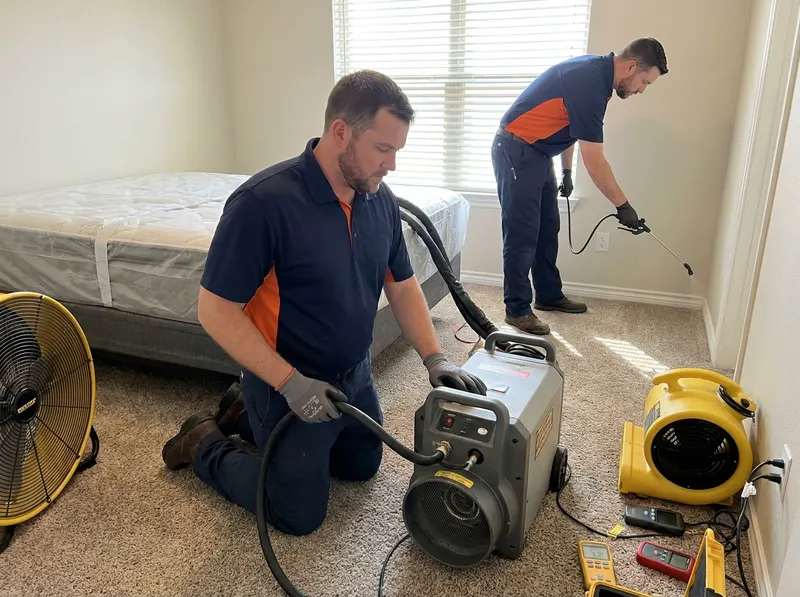
Bed bugs inhabit mattress cording, box spring frames, headboard mounting screws, electrical wall plates, and carpet margins, reproducing rapidly within residential bedrooms and commercial hospitality rooms. Surviving on human blood meals, these nocturnal parasites survive extended dormant periods between feedings. Comprehensive remediation options utilize high-output electric heat systems that elevate structural ambient temperatures past the lethal thermal death threshold of 122°F across all life stages, including heat-tolerant eggs. Thermal remediation is paired with localized spot-treatments using residual contact insecticides and amorphous silica desiccant dust injected directly into electrical wall receptacles, floorboard expansion gaps, and structural framing voids to ensure long-term eradication.
Get a quote →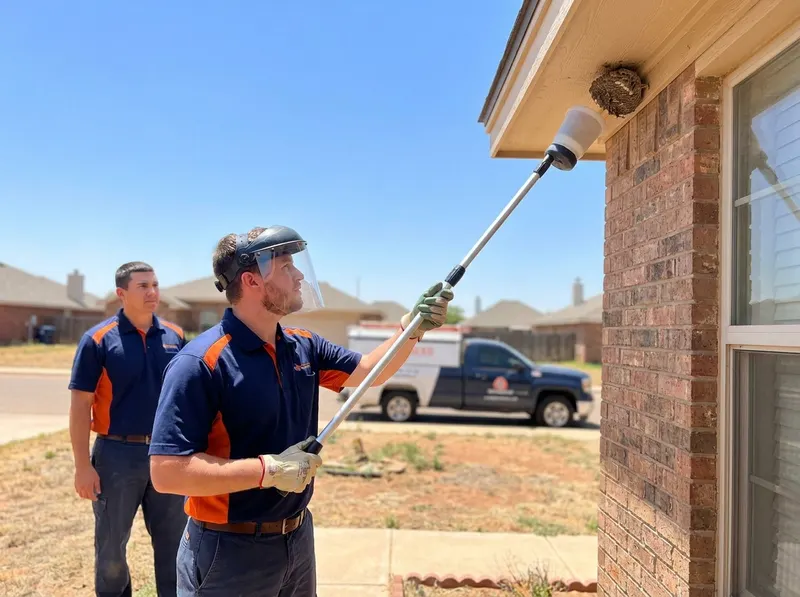
Paper wasps, yellow jackets, bald-faced hornets, and mud daubers build papery comb nests beneath roof soffits, gutter fascias, electrical meter boxes, and outdoor storage structures. Aggressive defensive swarms create immediate health hazards for homeowners, children, and pets enjoying outdoor areas. Professional extraction utilizes pressurized long-range dielectric aerosols that instantly paralyze adult flying populations from safe working distances. Technicians mechanically scrape down exterior nests, thoroughly scrape residual attachment points, and treat underlying substrate materials with non-staining micro-encapsulated repellents that deter scout wasps from rebuilding secondary colonies in the same structural overhangs or roof eves during the spring and summer.
Get a quote →You get a firm, itemized quote for your pest control services before any work begins, no surprises, no pressure.
Careful prep, tidy work, and a full cleanup when we are done. We treat your home and belongings like our own.
The same trusted, background-checked team from the first call to the final check.
Selecting structural pest defense depends on pest species biology, infestation severity, and architectural vulnerabilities. If the objective is stopping seasonal exterior invaders such as Turkestan cockroaches, field crickets, or striped bark scorpions before they enter, a quarterly perimeter micro-encapsulated barrier is the optimal protocol. If the objective is addressing an active indoor infestation of German cockroaches or bed bugs, choose an intensive multi-stage interior flush, baiting, and insect growth regulator program.
The trade-off is treatment location and preparation intensity: perimeter treatments require zero indoor disruption or furniture movement, whereas interior remediations demand comprehensive preparation of pantries, baseboards, and closets alongside focused follow-up inspections. For structural wood-destroying organisms like subterranean termites, specialized liquid trenching or sub-slab injection creates continuous chemical zones around concrete footings, whereas rodent intrusions require mechanical exclusion and entry-point sealing rather than chemical sprays alone. Commercial warehouse facilities and multi-family residential units require scheduled recurring exterior monitor grids, whereas single-family residential properties generally maintain complete perimeter integrity through focused seasonal applications timed directly ahead of local biological migration surges.
Selecting spot-treatments over full perimeter barriers saves short-term labor costs but introduces defensive gaps along untreated brick veneers, permitting mobile arachnids and crawling insects to redirect entry through unsealed weep holes or plumbing penetrations.
Every project gets a firm, written price after a free on-site visit. Ranges below for orientation.
Tell us about your pest control services job and we'll send a clear, written quote, usually the same day. Or just call and talk to a real Lubbock pro.
(806) 696-4828
Lubbock sits at an elevation of 3,256 feet atop the Llano Estacado, characterized by semi-arid alkaline soils, low atmospheric humidity, and persistent High Plains winds that create shifting subsoils beneath concrete foundations. Older residential properties in established neighborhoods like Tech Terrace, Melonie Park, and Maxey Park frequently feature traditional brick veneer construction over concrete grade-beam foundations or aging pier-and-beam supports. As caliche clay expansive soils expand during sudden heavy rainstorms and shrink during extended drought, hairline expansion fractures form in foundations, creating direct structural entry pathways for subterranean pests. The sharp temperature plunges during autumn freezes cause striped bark scorpions, field rodents, and Turkestan cockroaches to abandon outdoor agricultural habitats and seek warmth along residential baseboard perimeters. Furthermore, expansive commercial cotton and sorghum farmlands flanking Texas Tech University, Loop 289, and landmarks like Mackenzie Park drive massive field rodent populations inward as crops are harvested between September and November. Urban wind corridors along University Avenue, 19th Street, and 82nd Street disperse flying insect populations toward sheltered brick walls, demanding exterior chemical barriers specially formulated with UV-stable and alkaline-resistant micro-encapsulated polymers that do not degrade under intense West Texas sun exposure.
Free estimates for Lubbock & the surrounding area.
 Torvexa Pest Management